Baking & Pastry Curriculum for Middle School, High School & CTE Programs
Baking is the medium.
Capability is the outcome.
BAPC is a complete Grades 6–12 baking and pastry education system that combines professional technique, applied academics, and career readiness in one ready-to-teach curriculum.
Designed for CTE Programs
REFERENCES RECOGNIZED INDUSTRY COMPETENCIES
Flexible licensing
Grades 6–12
Built by an Educator
The Kitchen Is a Classroom
A culinary classroom teaches more than culinary technique.
Every time a student steps into a kitchen, they read and follow technical instructions. They calculate. They sequence. They communicate under time pressure, make decisions with incomplete information, and recover from mistakes that are immediately, visibly their own.
BAPC was built to make those moments intentional while preparing students with real baking and pastry skills they can carry into postsecondary education and the workforce.
Because the goal isn't only to teach students what to bake. It's to help them find out what they're capable of.
WHAT IS BAPC?
BAPC is a complete baking and pastry instructional system for middle school, high school, and Career and Technical Education programs.
Across two progressive levels, 16 fully developed units and 48 sequenced lessons connect classroom instruction, baking science, hands-on production, assessment, and product evaluation.
SEE HOW BAPC TEACHES
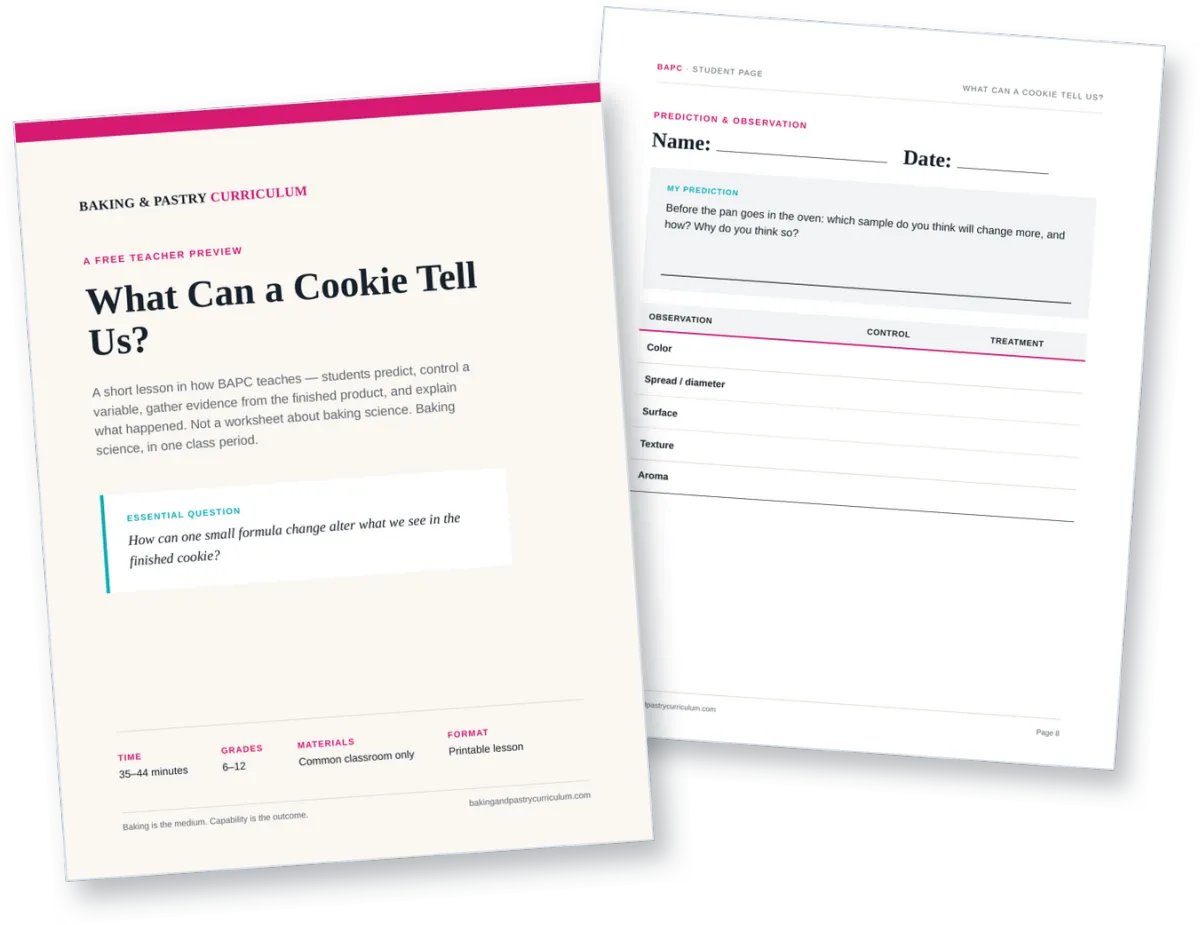
What Can a Cookie Tell Us? gives teachers one complete, classroom-ready BAPC experience. Students predict, control a variable, gather evidence from a finished product, and explain what happened.
Grades 6–12
One class period
Basic culinary classroom materials
Instructor guidance and printable student pages included
What Students Leave With
BAPC is built as a progression, not a collection of activities. Students move through sequenced technique, applied science, and professional practice, the way a working kitchen builds a baker.
Skills they can use anywhere:
Reading and executing technical instructions
Sequencing and time management under real deadlines
Ratios, scaling, and formula conversion
Evidence-based decision-making—testing, observing, adjusting
Collaboration and shared workspace management
Recovering from failure and working independently
Skills that prepare them for the industry:
Professional technique across doughs, batters, laminated pastry, and yeast bread
Food-safety and sanitation instruction that references ServSafe Food Handler requirements
The vocabulary and workflow of a professional kitchen—mise en place, production timelines, station management
Production-day experience that mirrors real bakery conditions
A documented skills progression teachers can use for portfolios, competitions, and postsecondary or workforce placement
Not every student who takes a baking and pastry course will become a baker. Every student should leave more capable than they arrived. Students don't finish with a folder of recipes. They finish with a skill set.
Built for the realities of culinary education
Culinary programs don't fail because teachers lack passion. They struggle against conditions no one in the building chose.
Planning time that doesn't exist. Culinary teachers prep labs, order food, manage equipment, and teach — then build curriculum on their own time. BAPC arrives built.
Inconsistency across campuses. When every teacher builds their own program, no two students in a district get the same preparation. One curriculum, one progression, campus to campus.
Uneven industry background. Some culinary teachers come from professional kitchens. Some come from FACS or another content area. BAPC carries the technique so the teacher doesn't have to supply all of it.
Equipment and space constraints. Production handouts and lab structures are designed for real school kitchens—limited stations, shared ovens, and class periods that end whether the dough is ready or not.
Accountability you have to answer for. Documented scope and sequence, assessments at every stage, and a progression you can present to a board, committee, administrator, or parent.
Why Schools Choose BAPC
Teachers shouldn't have to build an entire instructional system in order to teach one.
BAPC removes that burden. Every lesson, production lab, assessment, and classroom resource is designed to work together — creating a consistent experience for students and giving teachers back the hours they were spending on preparation.
What that produces is a program an administrator can actually defend: sixteen units with a documented scope and sequence, assessment at every stage, and a technique progression that moves students toward industry practice rather than around it.
EVERY UNIT INCLUDES
Three sequenced lesson plans
Guided student notes
Three instructional slide decks
Pre-assessment and post-assessment
Production-day resources
quiz with answer key
Review activities and games
substitute plans
Every active BAPC license also includes access to the Companion Recipe Library for the licensed curriculum level or levels.
Meet the Founder
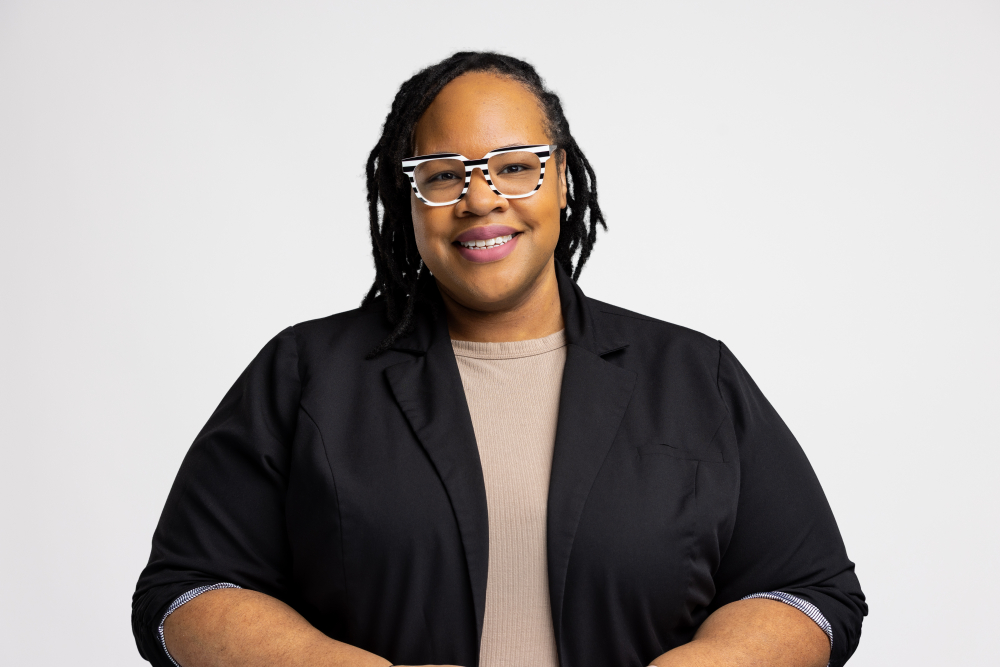
BAPC was created by Kimberly I. Houston, a Le Cordon Bleu-trained pastry chef and culinary educator with more than a decade of classroom experience and graduate degrees in instructional design and transformational leadership and coaching
She taught this material before she wrote it. Years of building lesson plans, assessments, and production labs for her own students, then meeting the same problem in every school she visited: baking and pastry teachers were being asked to build entire programs alone, on their own time, with nothing to build against.
BAPC is what she built instead: classroom experience and formal instructional design brought together within one coordinated system. Today, BAPC is developed by Mise & Method Education, LLC and continues to evolve through ongoing curriculum development, educator feedback, and a commitment to preparing the next generation of baking and pastry professionals.
Ready to Build a Stronger Baking & Pastry Program?
Schedule a personalized BAPC demonstration to explore the curriculum, licensing options, and educator support available for your school or district.
Baking and Pastry Curriculum
Program Overview